








Student Housing in Rimouski
Student Housing in Rimouski
2025
Residential
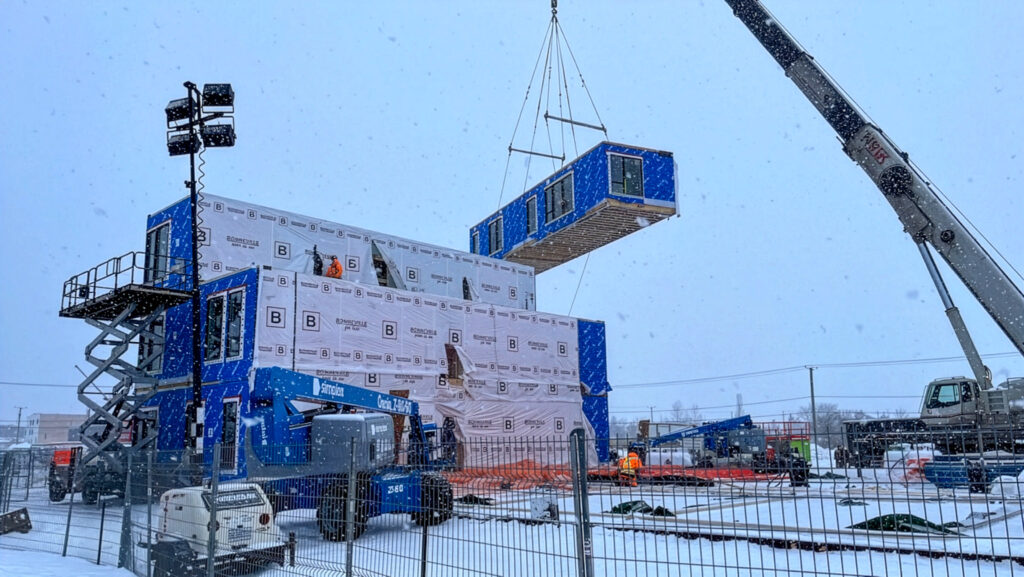
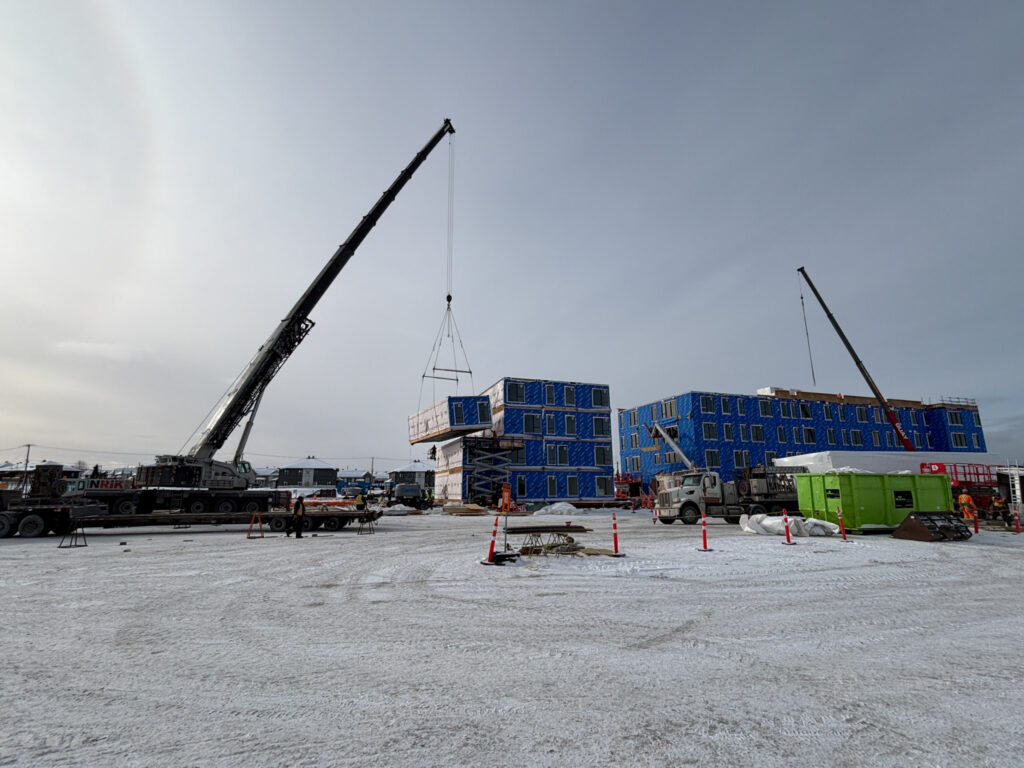
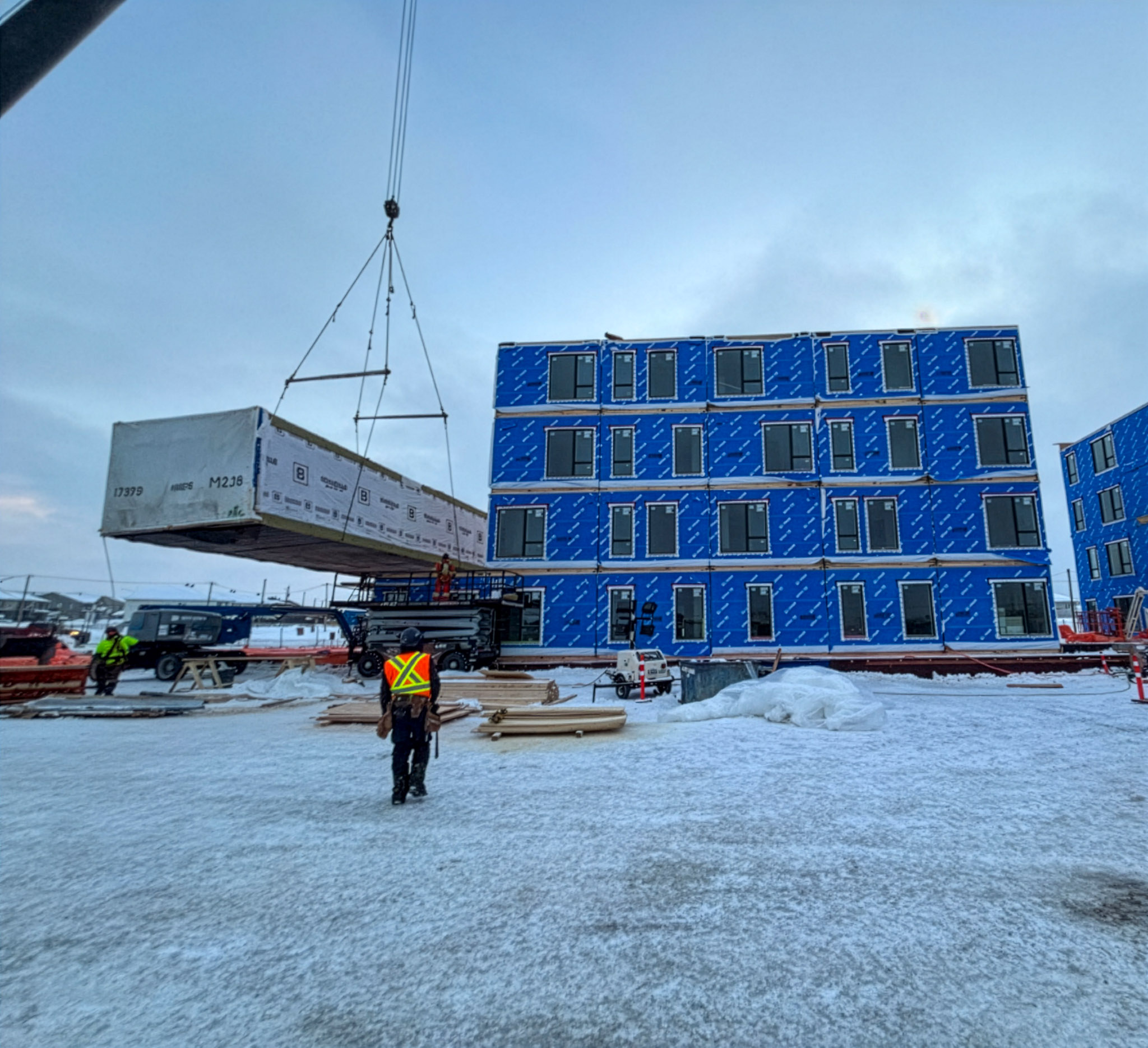
The student housing project in Rimouski was developed to address an urgent need for affordable housing for students of the Université du Québec à Rimouski, in a context of strong pressure on the regional rental market.
Designed to welcome its first occupants for the September 2025 academic term, the project stands out for its exceptionally tight schedule and the large-scale use of modular construction.
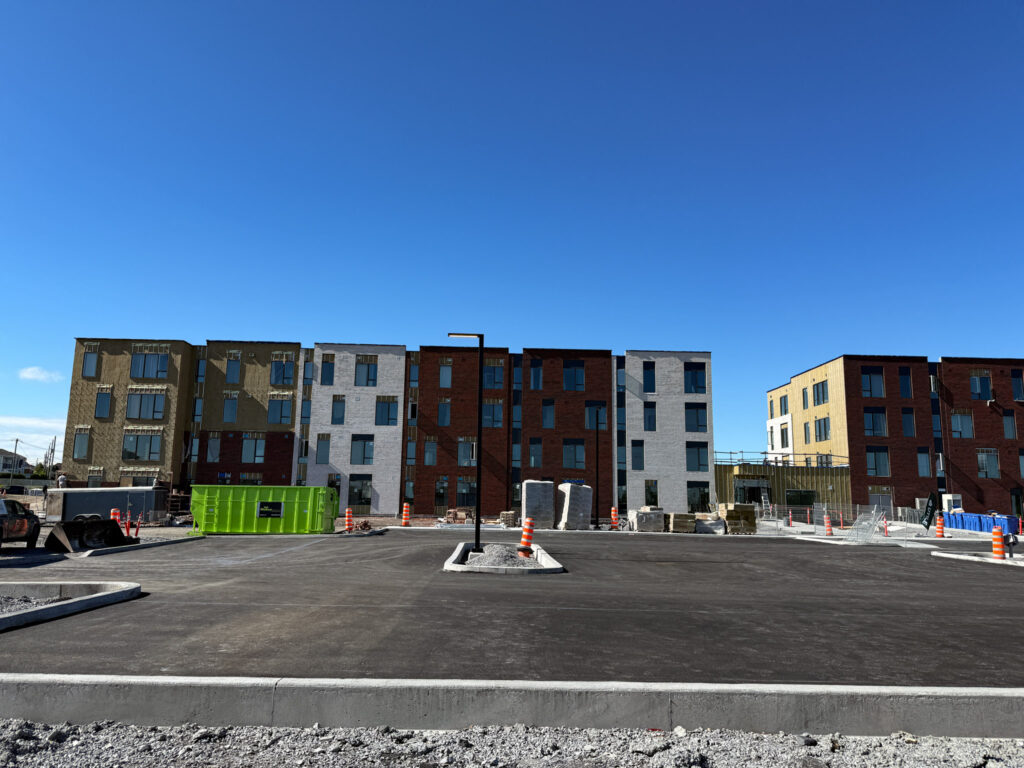
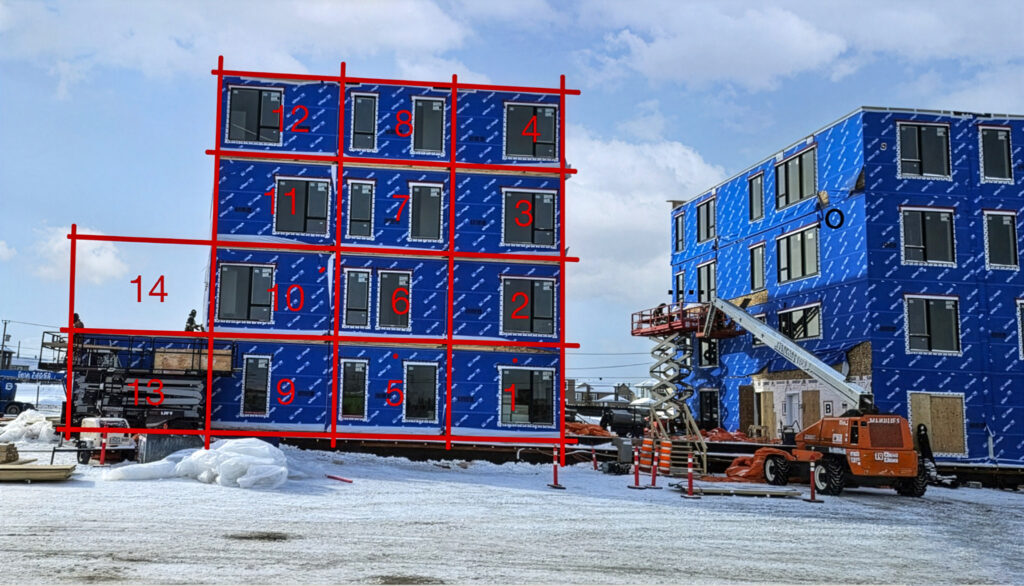
The complex consists of two four-storey modular buildings comprising a total of 96 modules, connected by a central conventional structure that includes several shared common areas. This hybrid configuration combines the speed of modular construction with the architectural flexibility of traditional building methods, while fostering student community life.
Mandate and Multidisciplinary Expertise
gbi was mandated to deliver all engineering disciplines for the project, including structural, mechanical, electrical and civil engineering.
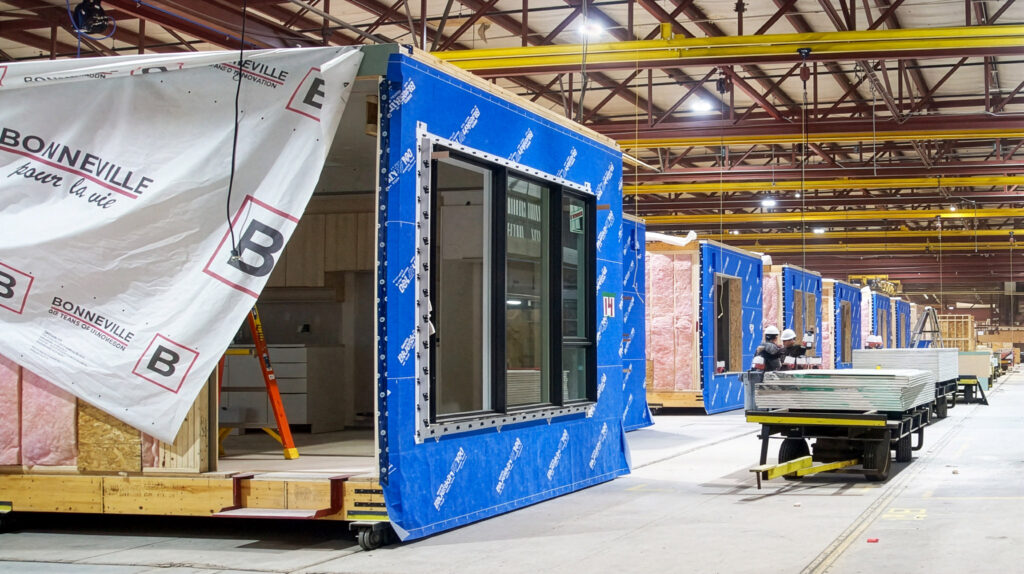
The mandate was distinguished by close coordination between factory fabrication and on-site construction, a critical factor for the success of a modular project in a regional context.
The teams analyzed and anticipated the specific constraints of the Bas‑Saint‑Laurent region, notably the limited availability of skilled labour, in order to optimally determine which elements would be manufactured in the factory and which would be completed on site. This rigorous planning approach made it possible to meet the client’s technical and budgetary requirements while fully integrating local realities.
Affordable housing units
m² of floor area
mois d’échéancier global dont 11 mois de travaux en chantier
Approach and Collaboration
The project was delivered using an integrated design approach, based on close collaboration between the client, architect, contractor, modular manufacturer and engineering teams. This collaborative process made it possible to identify and resolve technical challenges during the design phase, thereby reducing risks and minimizing adjustments during construction.
Design and construction activities were carried out concurrently, requiring rigorous planning and continuous communication among all stakeholders. This collaborative approach, inspired by integrated project delivery principles, was a key factor in meeting the project’s highly constrained delivery schedule.
Technical Challenges
The modular nature of the project presented several distinctive technical challenges. Constraints related to building heights, interstitial spaces and code requirements required precise coordination between disciplines, particularly structural, mechanical and electrical engineering.
Fire separation strategies were a key consideration, as was the poor quality of the site’s soil, which necessitated a thorough evaluation of foundation options. The proximity of the St. Lawrence River added further complexity, due to saline winds and increased lateral loads that had to be considered in the structural design.
Engineering Solutions
Several innovative solutions were implemented to optimize both costs and building performance. A strategic building code approach made it possible to avoid sprinklering concealed spaces, resulting in substantial cost savings while maintaining full code compliance and safety.
Three foundation scenarios were analyzed to identify the solution offering the best cost-benefit ratio. gbi’s structural team also took on the design of the brick ties, a responsibility not typically assumed by this discipline, which contributed to cost reductions while ensuring envelope durability.
BIM coordination played a central role in anticipating module compression and ensuring the precise positioning of mechanical and electrical components, helping to minimize adjustments during construction.
Schedule and Performance
By manufacturing the modules in the factory concurrently with site work, the project was delivered in just 15 months, a significantly shorter timeline than a traditional construction approach. This performance enabled the client’s objective of delivering the housing in time for the September 2025 academic term, while meeting both budgetary and technical constraints.
Impacts and Benefits
The Rimouski student housing project directly contributes to addressing the student housing shortage by providing affordable, purpose-built accommodations in a regional context.
It also supports the vitality of Rimouski’s student district and enhances the attractiveness of UQAR for its student population, including international students.
The project serves as a concrete demonstration of the relevance of modular construction for large-scale residential developments and represents a model that can be replicated elsewhere in Québec.