








Espace Montmorency
Espace Montmorency
2023
Commercial
Residential
Canadian Consulting Engineering Awards
2023
ASHRAE Region 2 Technologies Award
2025
Neighborhood Development
Tower 2 – Core and Shell
Tower 3 – Core and Shell
Towers 1 and 4 – New Construction
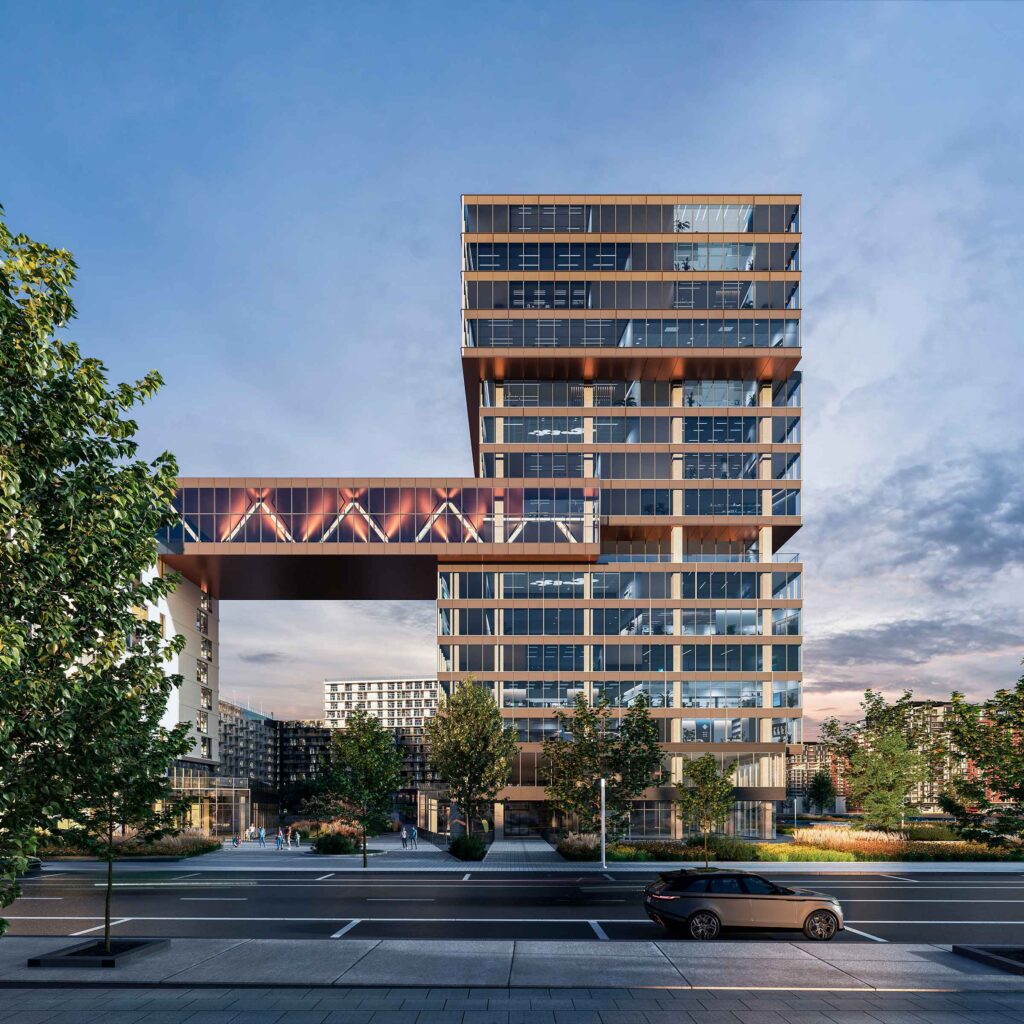
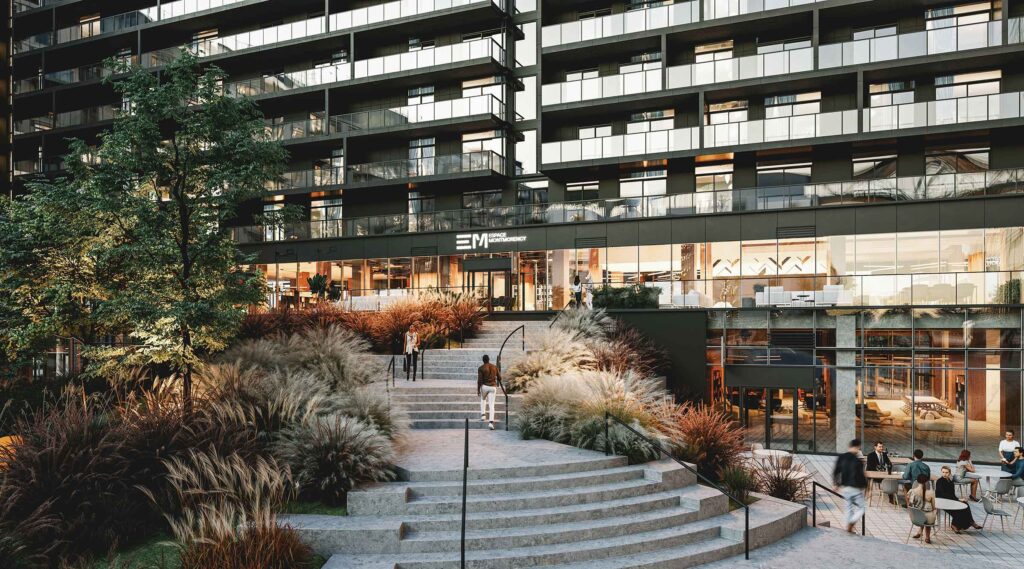
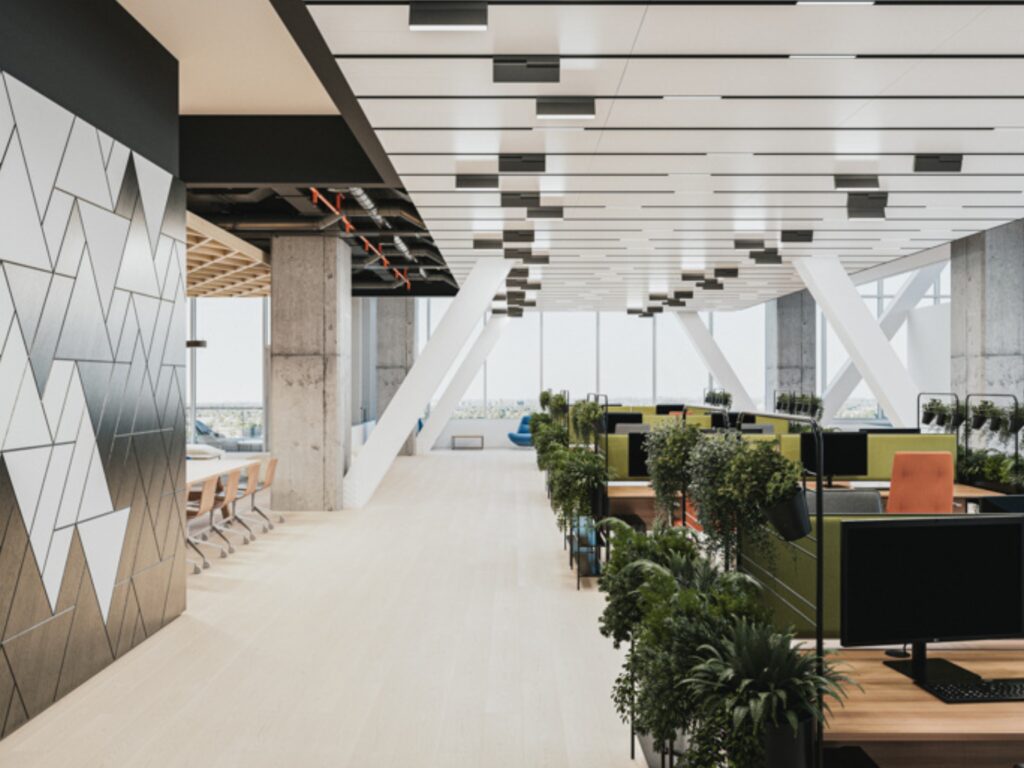
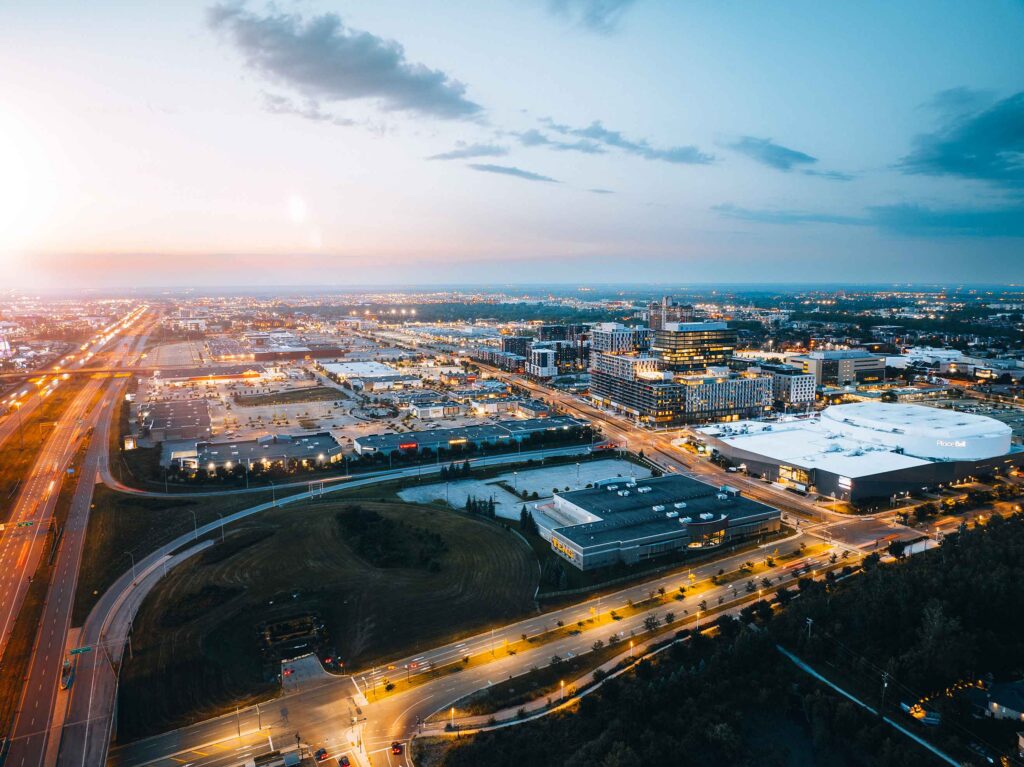
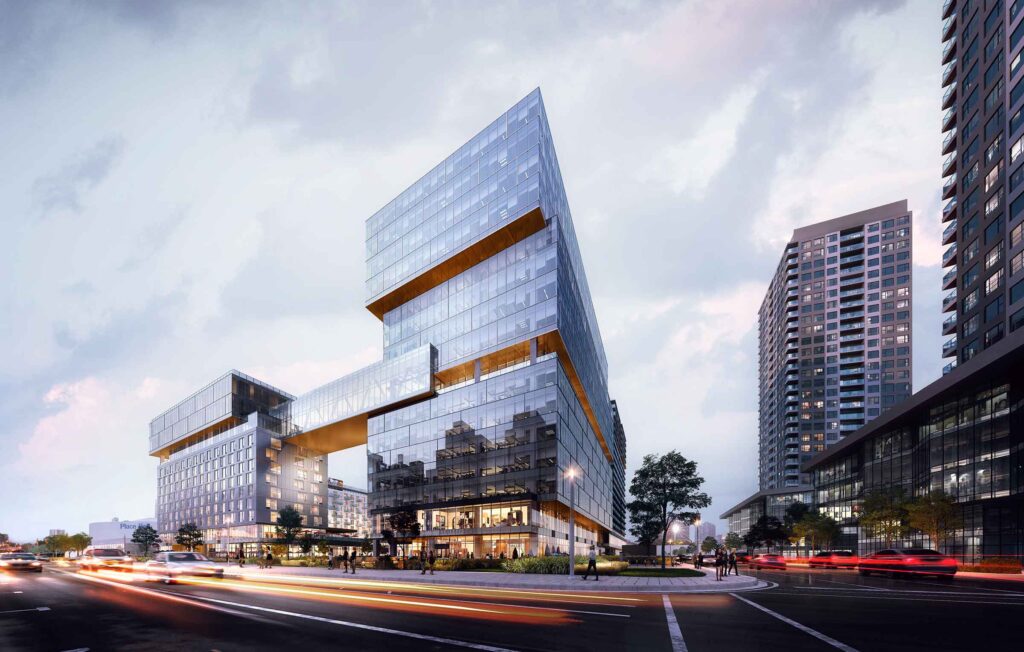
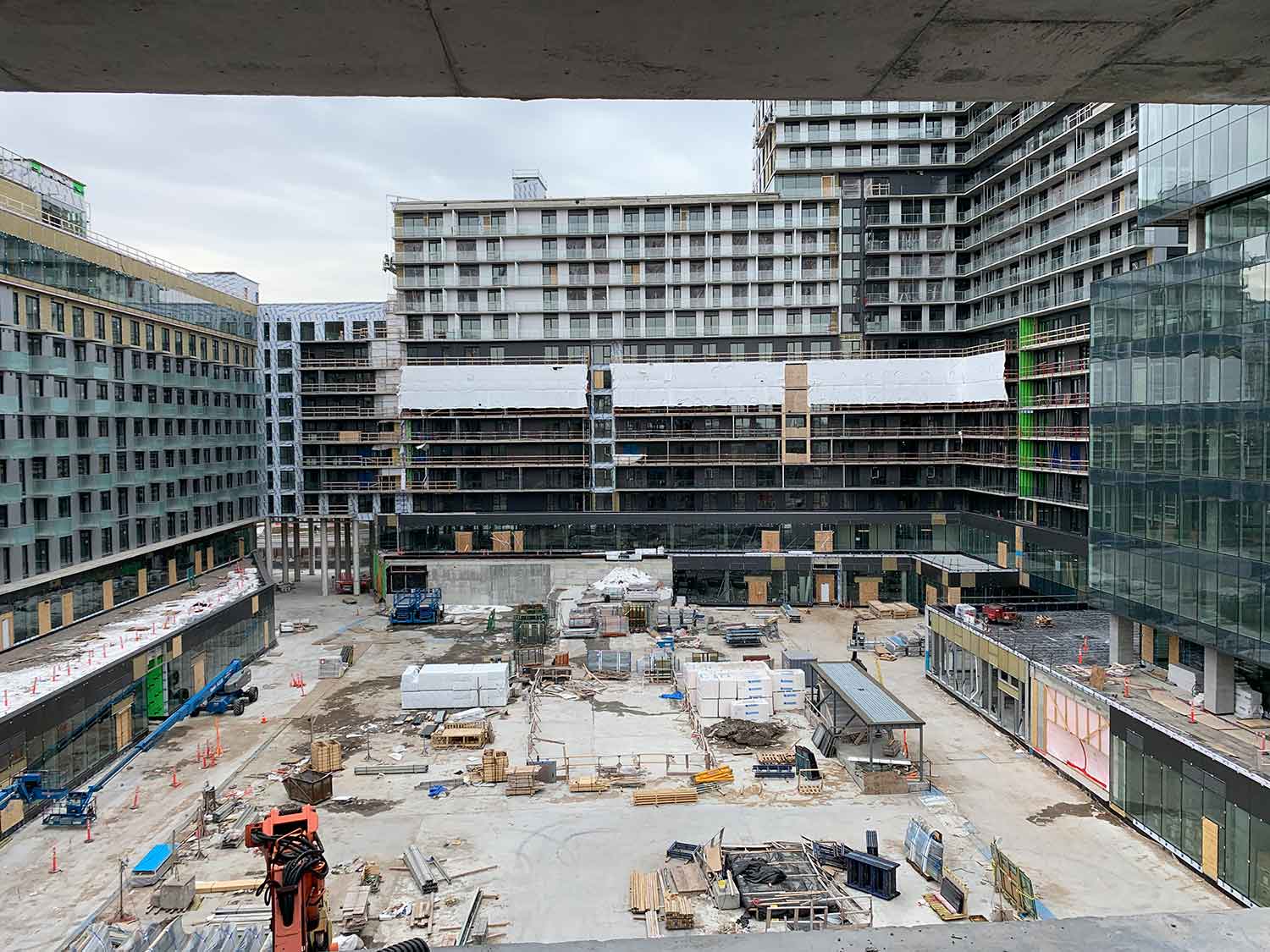
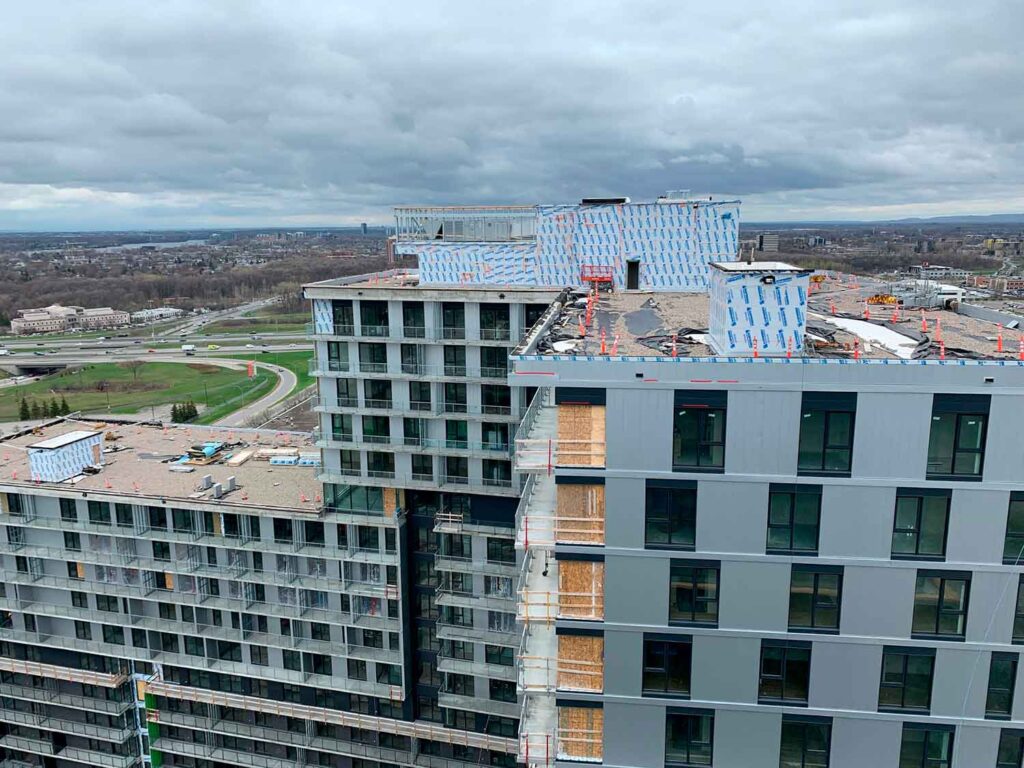
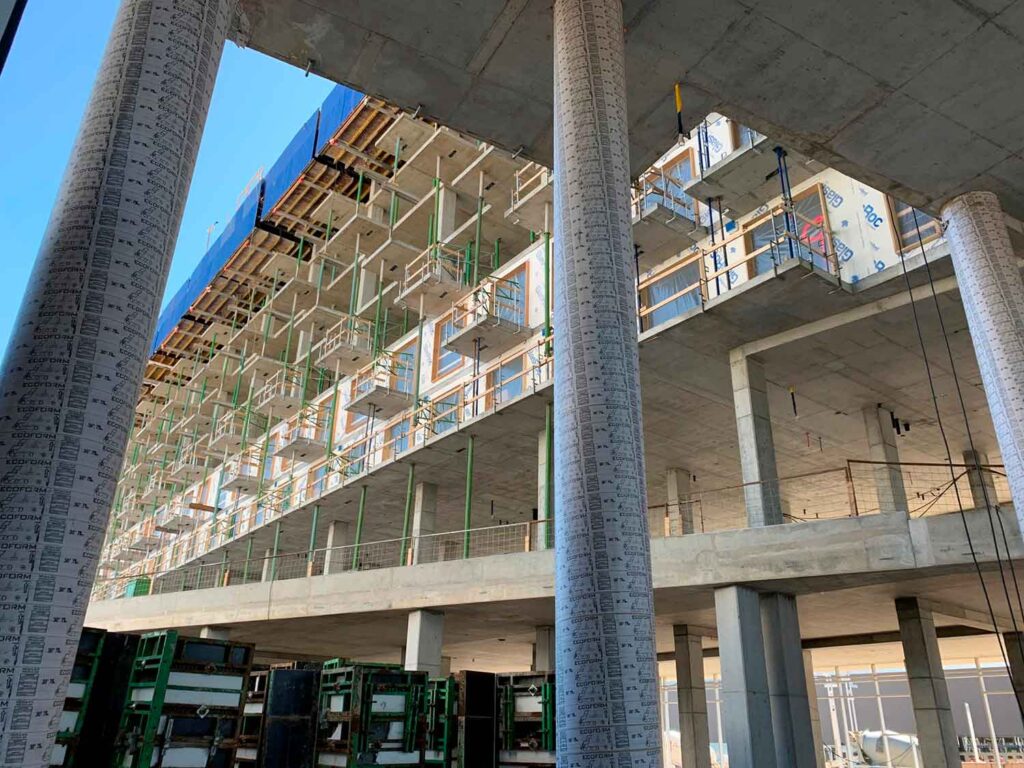
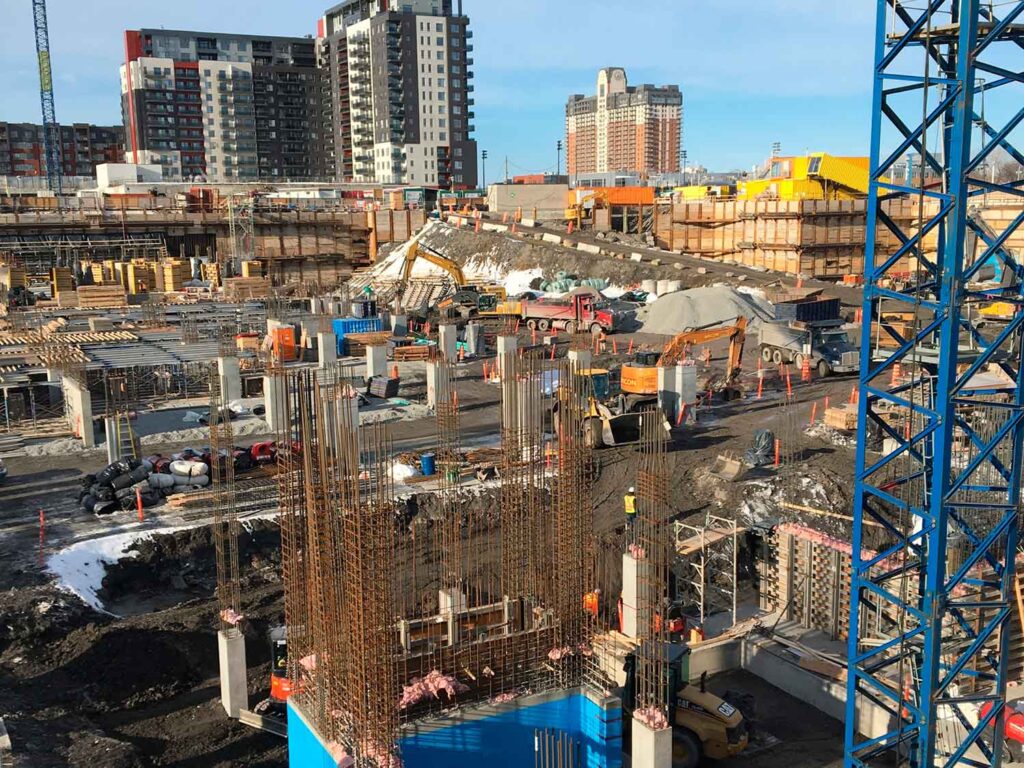
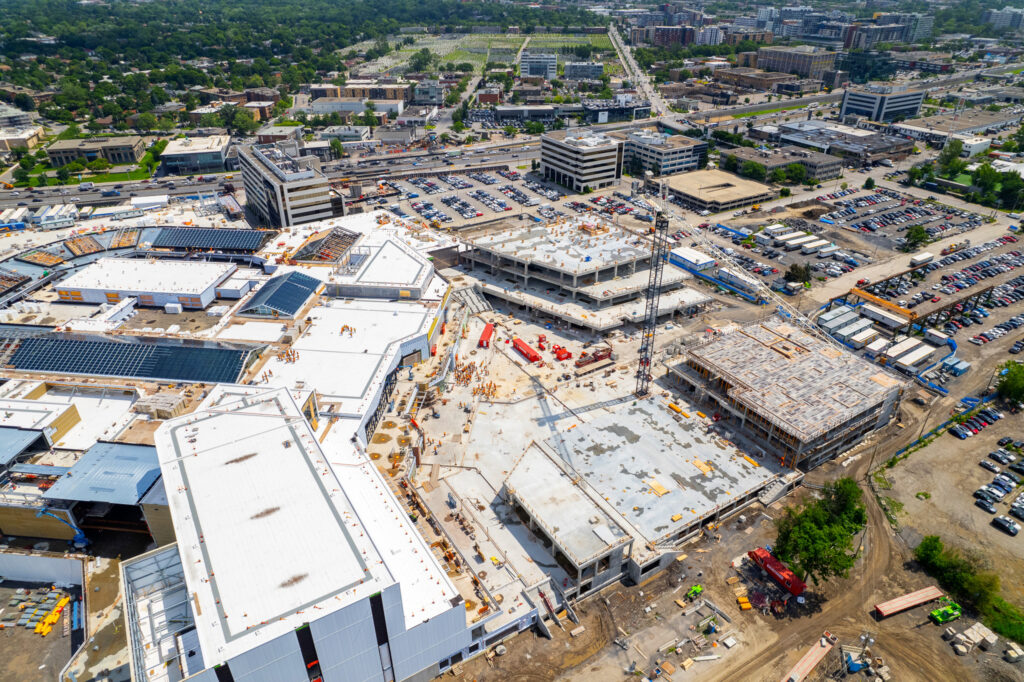
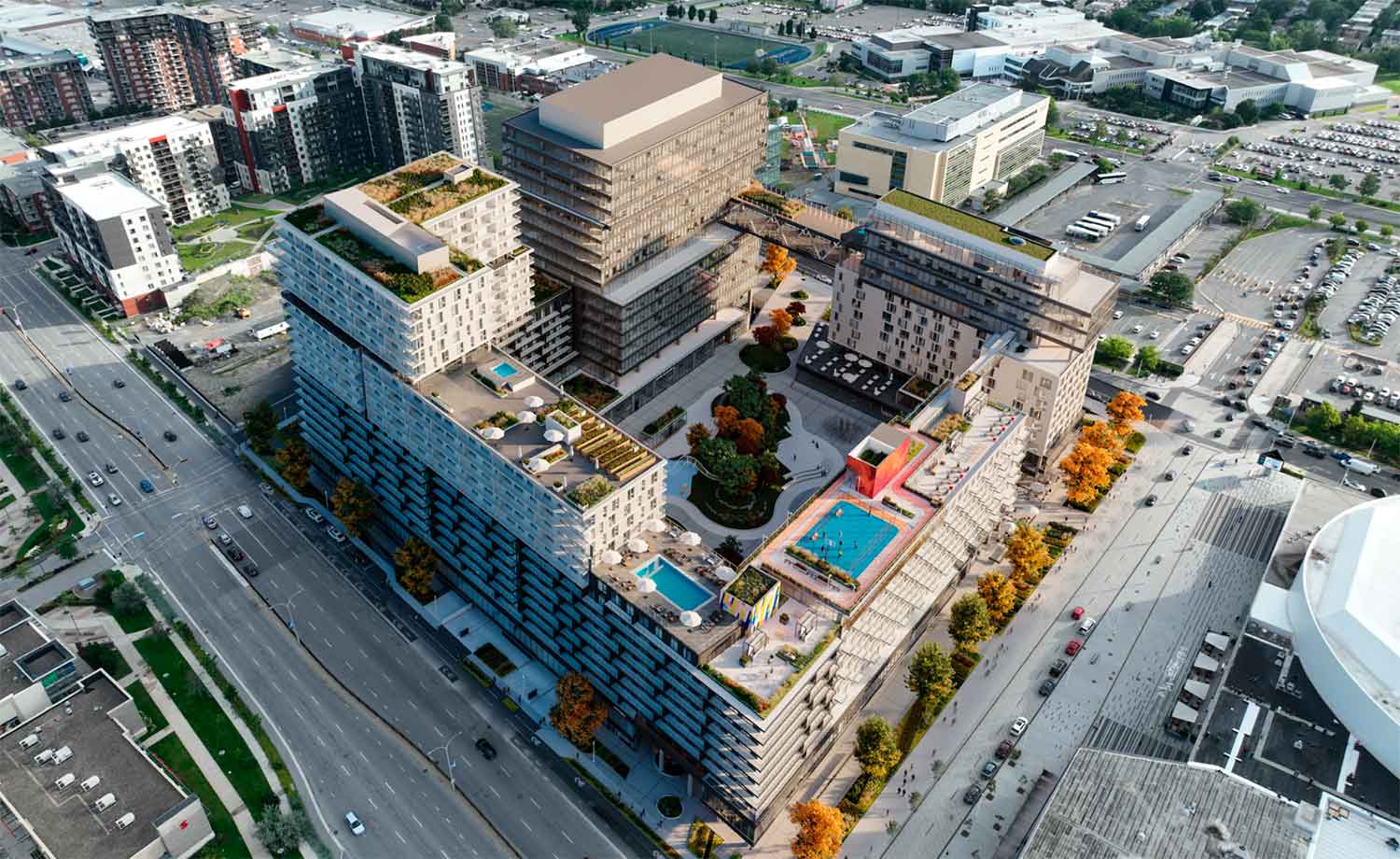
Espace Montmorency is a multifunctional project consisting of four towers totaling 1.3 million sq. ft., built to offer a wide range of services and a vibrant, downtown-style atmosphere. In this major real estate development, gbi implemented an energy loop connecting the four towers, enabling the recovery and redistribution of the energy produced.
The four towers and the energy loop are located in a neighborhood designed around the principles of TOD (Transit-Oriented Development). This type of neighborhood is a medium- or high-density real estate development structured around high-capacity public transit.
A feasibility study was first carried out to assess the possibility of adapting an existing technology—an energy-sharing loop—to a large-scale, mixed-use complex within a TOD-type development. An hourly energy demand model for an entire year was used to compare the annual needs of a traditional system with those of a loop system that recovers and shares energy between buildings according to each one’s peak periods.
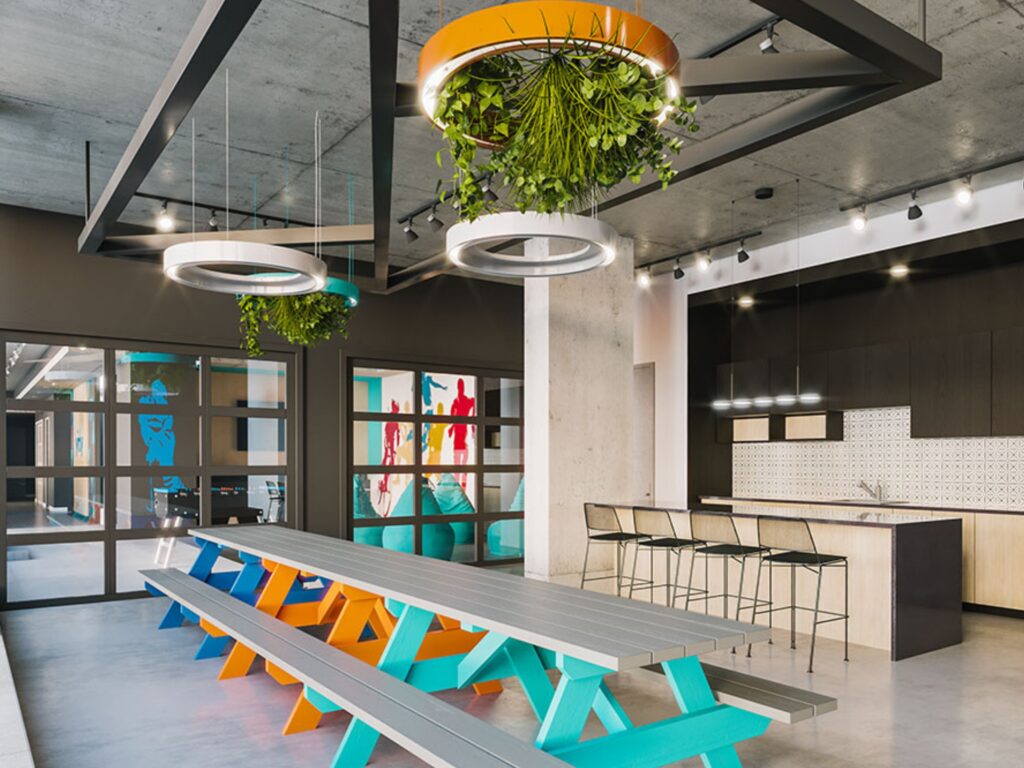
Diverse Use of Spaces
The variety of space uses required great creativity and the full expertise of our professionals to integrate the necessary equipment throughout the towers.
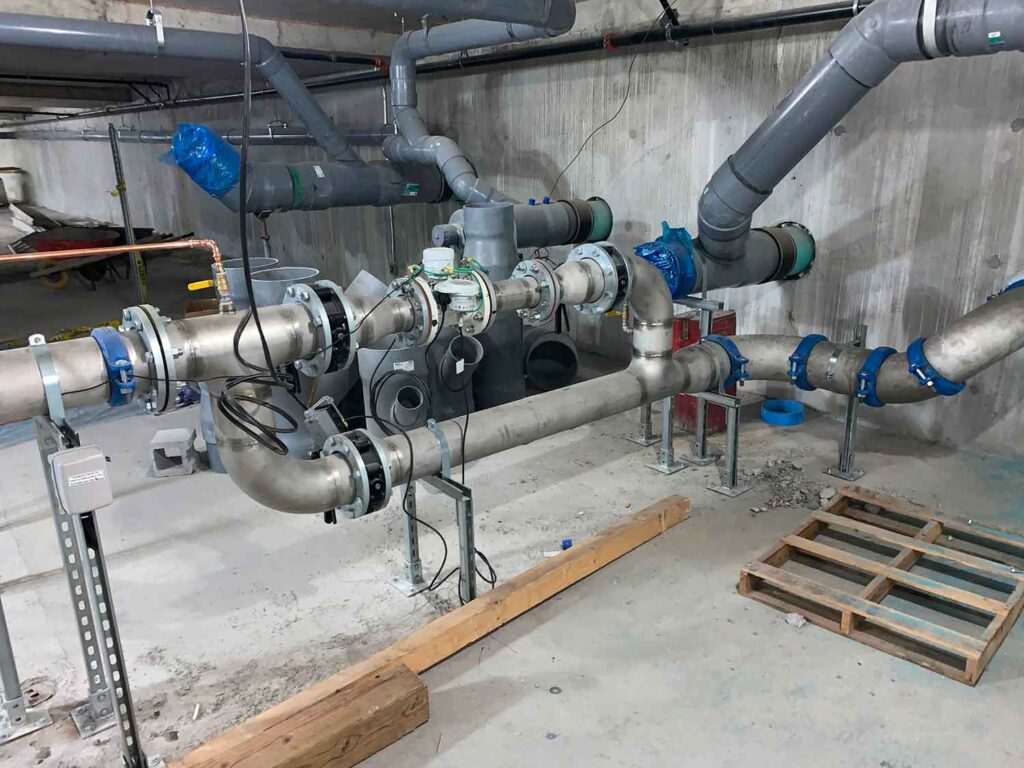
Special attention was given to all building services due to the site’s scale. Sanitary and water supply systems were separated for each tower, while the stormwater network is directed to a common retention basin for the entire site. Part of this stormwater is also recovered and redistributed within the residential tower.
Design of the Energy Transfer Loop
A unique thermal plant located on the office tower’s roof powers an energy transfer loop shared across all sectors. The diversity of uses, occupancy patterns, and building orientation optimizes thermal exchanges. A combination of systems, including aerothermal modules for loop heating, an electric boiler, a high-efficiency condensing boiler, and energy recovery ventilators, allows heat to be injected into or rejected from the loop.
Sustainability Certifications
The Espace Montmorency project is pioneering in several ways. It is the first project in Québec to achieve LEED® v4 Gold certification for Neighborhood Development. The clients are also targeting LEED® Platinum for the building envelope and LEED® Gold for interior design and construction.
Water Management
Water retention and reuse were also integrated into the design. Low-flow or ultra-low-flow fixtures are installed in most spaces. Additionally, the office tower recovers rainwater in an internal retention basin. Part of this rainwater is stored in a daily basin supplying sanitary fixtures across 10 floors. Thus, the toilets and urinals use harvested rainwater.
Flexible and Adaptive
gbi designed the system to be flexible, adaptive, and scalable to meet future needs, adjust over time, and eventually supply energy to new buildings. Capacity and controls were planned with this vision in mind.