









CEPSUM Synthetic Field
CEPSUM Synthetic Field
2023
Sports

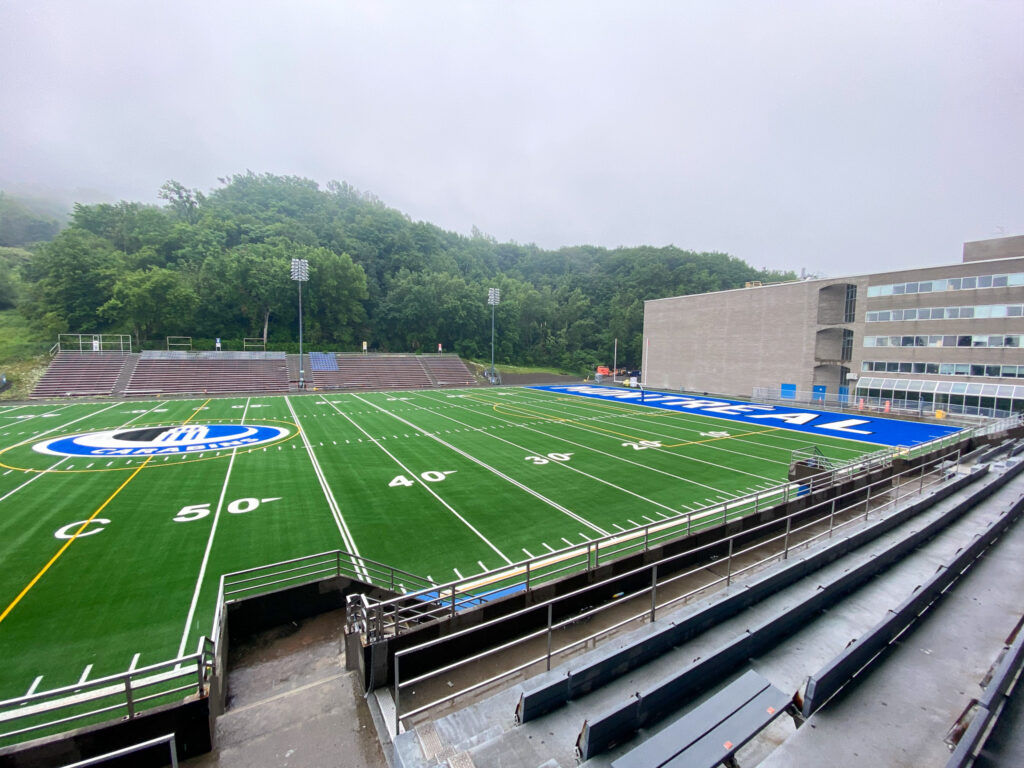
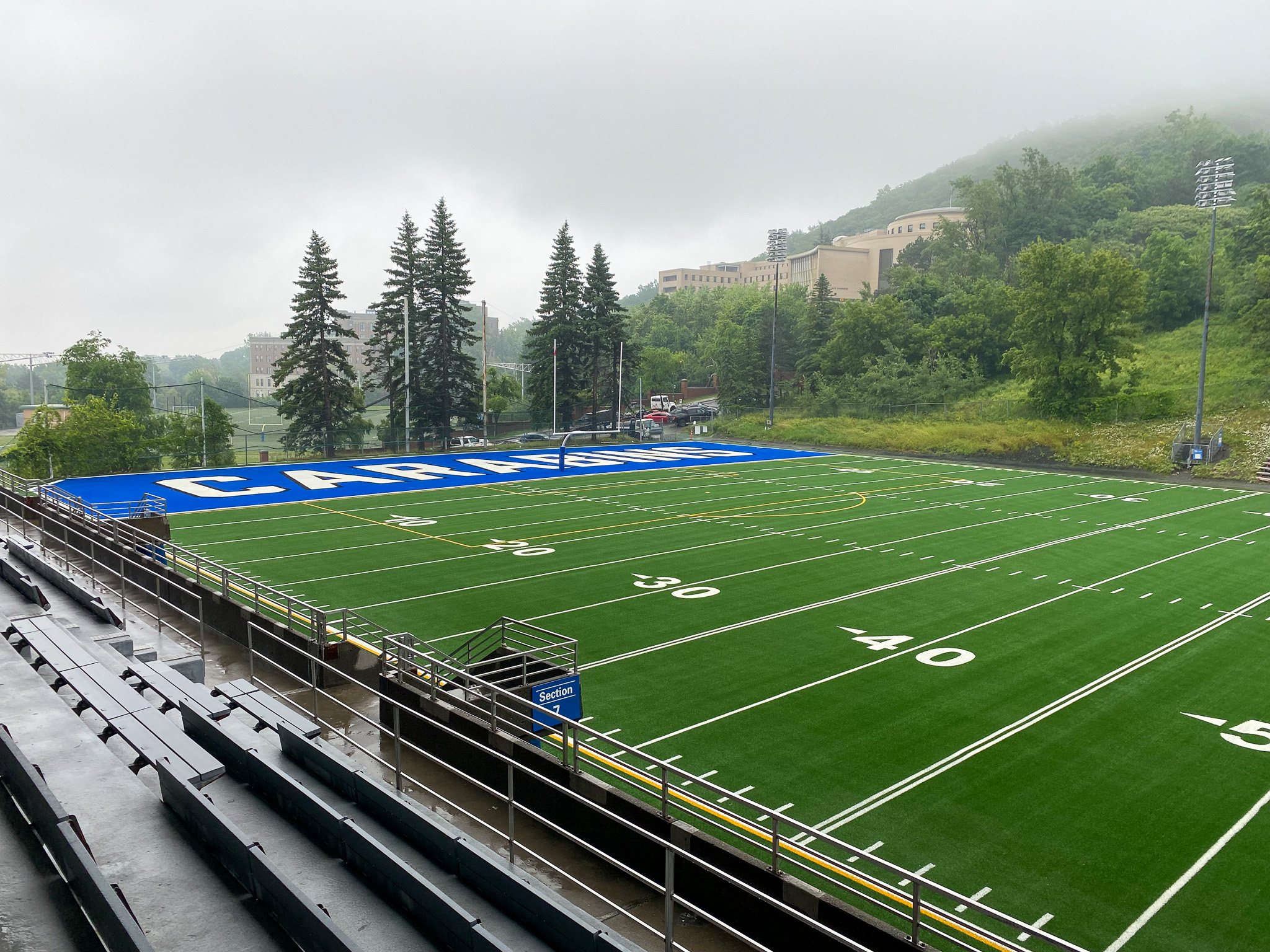
gbi’s mandate consists of refurbishing an existing synthetic field and upgrading the stormwater drainage adjacent to the winter stadium at CEPSUM, Université de Montréal. This project stands out primarily for its innovative approach and commitment to sustainability, meeting the highest standards of quality, safety, and user experience. The redesign of the synthetic field also aimed to create a playing surface compliant with FIFA regulations.
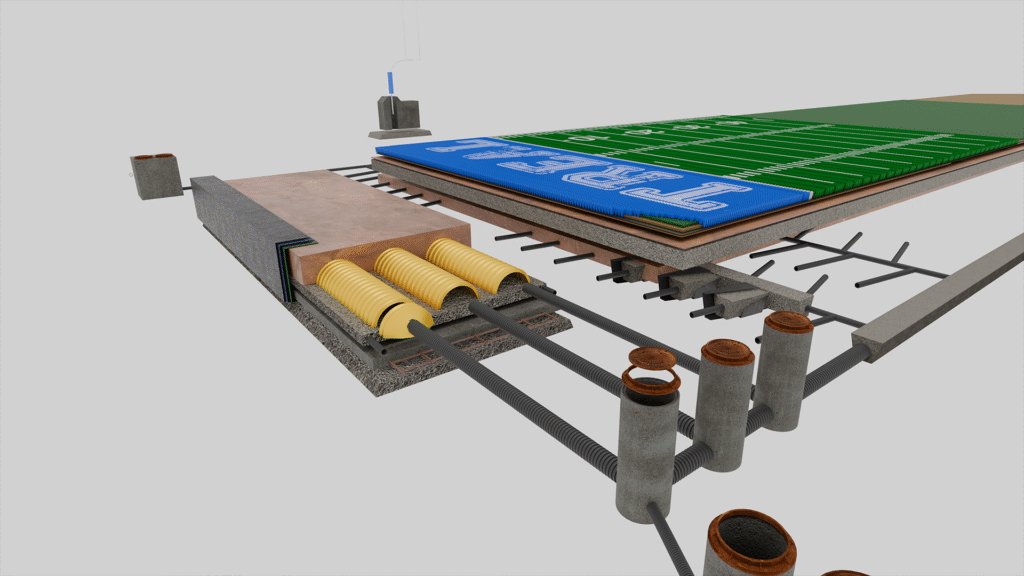
A crucial aspect of the project involves the drainage and retention of stormwater, in accordance with the City of Montreal’s regulations. An integrated retention chamber, discreetly incorporated, serves as an innovative solution to manage frequent heavy rainfall without compromising the site’s aesthetics. This infrastructure update is significant as it allows compliance with very strict water management requirements, despite the dense urban setting of the field.
Initially, the synthetic field was considered impermeable by the city. gbi undertook the necessary steps to obtain a special exemption, demonstrating an adequate infiltration rate for a synthetic surface. These efforts resulted in substantial cost savings for the client.
A field designed for performance and durability
One of the key features of this project is the choice of synthetic turf.
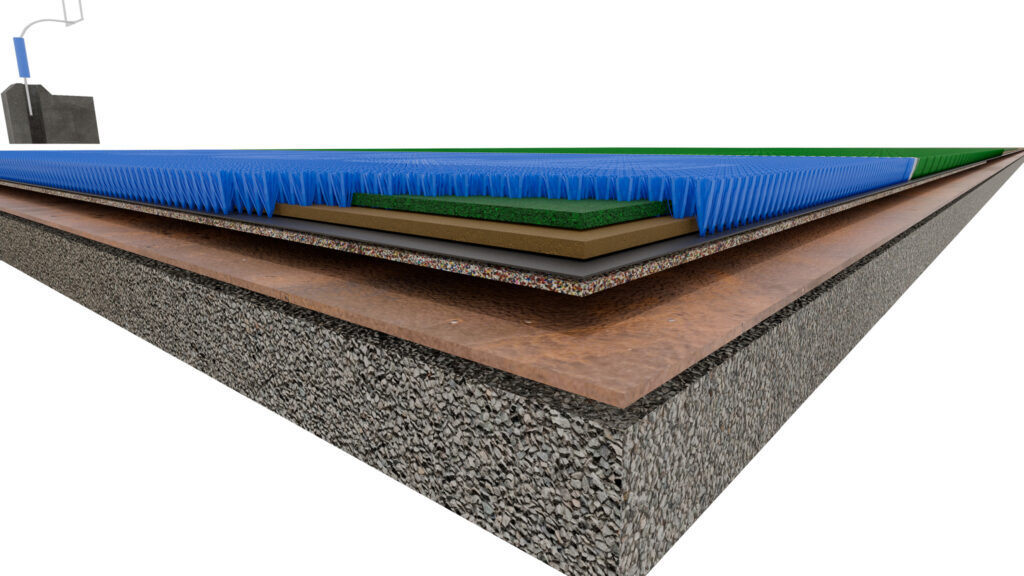
Comprised of 60 mm-high hybrid fibers, with a green rubber infill and a 20 mm shock-absorbing underlayer, the team’s recommendation goes beyond aesthetic considerations, emphasizing durability, comfort, safety, and resilience to the field’s intensive use.
The use of green rubber granules, although more costly, offers an eco-friendly solution due to its composition while reducing the heat island effect by lowering the field temperature by 2° to 3°C. The team’s proposal goes even further by incorporating an absorbent underlayer beneath the synthetic turf to mitigate shocks and impacts, significantly reducing the severity of injuries or head trauma.
° reduction in temperature
years of service life
% fewer injuries since the opening of the new field
Construction complexity
Time constraints required the construction work to be carried out in winter conditions, following an accelerated schedule to meet the Montreal Carabins football season calendar. Everything had to be completed in time for the university team’s first home game. This pressure demanded exceptional responsiveness from gbi’s team and the project collaborators.
The proximity of sensitive facilities, such as the swimming pool and sports medicine spaces located under the stands, required careful management of noise and vibrations. Strategic construction pauses were planned to minimize disruptions for residents, students, and users of adjacent services. These precautions also had to be implemented within the tight project timeline, which was ultimately delivered on schedule. Additionally, the installation of the retention basins involved blasting in an urban area, a delicate operation requiring precise coordination within a dense urban environment.
Stormwater management
Compliance with the new stormwater management regulations in Montreal introduced additional challenges, requiring the redesign of retention systems on an existing field. This effort made a significant contribution to reducing water backflow in the City of Montreal, involving careful optimization within the urban environment. The project also faced the unexpected discovery of uncharted buried pipes, which led to temporary work stoppages, thorough analysis, and updates to the plans developed by the team.
.
Material recycling and reuse
In line with a recycling approach, the rubber granules and sand from the existing synthetic field were recovered for future use, demonstrating a commitment to sustainable resource management. In addition, the turf mats from the current synthetic surface were recycled into plastic flooring thanks to the project collaborators, promoting material circularity.
A standout project
The CEPSUM synthetic field refurbishment project was a finalist at the Grands Prix du génie-conseil québécois 2024 in the Urban Infrastructure category, presented by the Association des firmes de génie-conseil du Québec.
These are the kinds of works that aren’t immediately visible, yet are enormous. Expanding the new surface takes three weeks, but it required 12 months of preparation beforehand, including structural reinforcements. With climate change, the City of Montreal updated its regulations. The retention basins will hold water and release it gradually. This entails a lot of additional work and costs, but it was necessary to do.
Manon Simard
Director General of CEPSUM