







Verdun Urban Beach
Verdun Urban Beach
2019
Grands Prix du génie-conseil québécois
2020
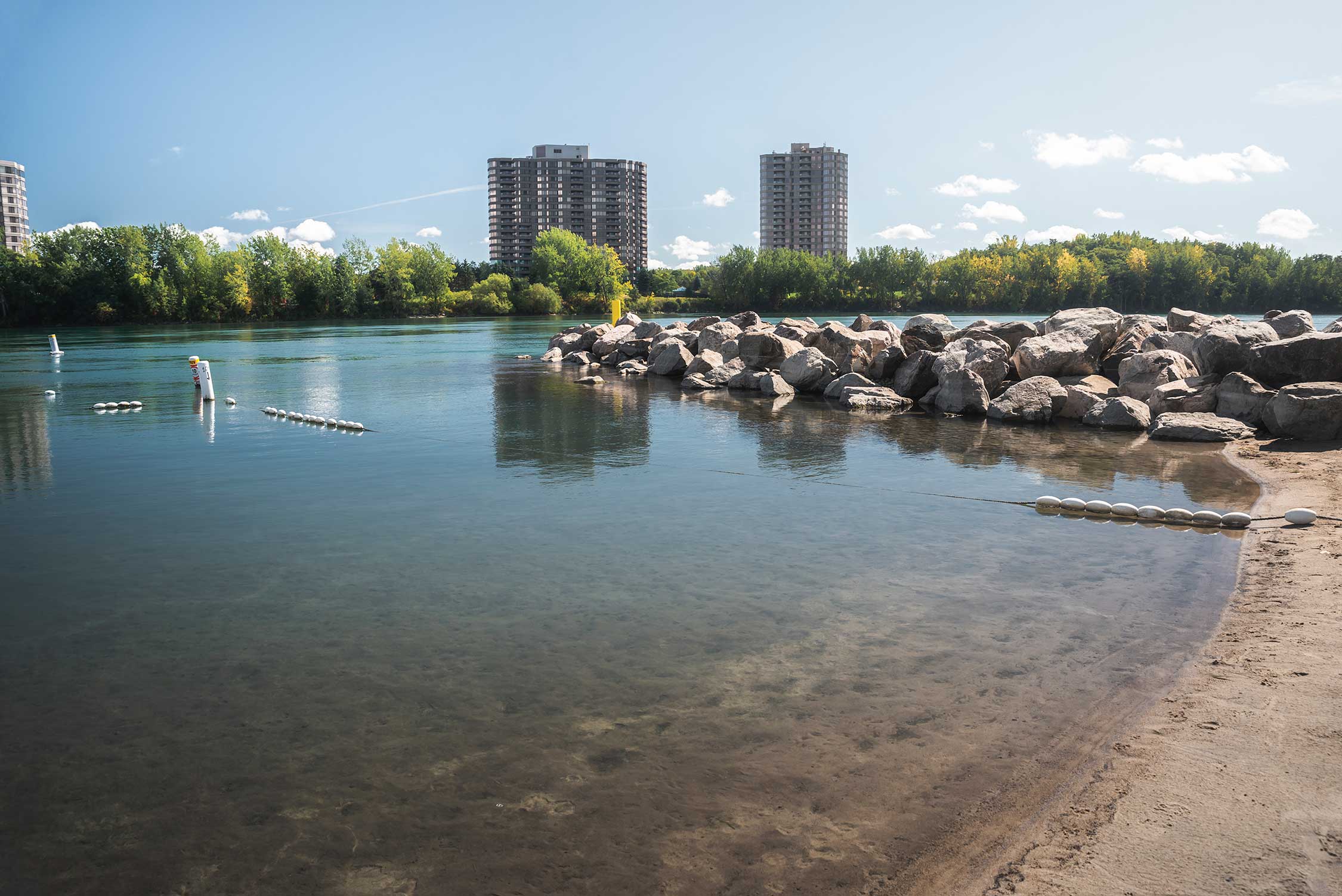
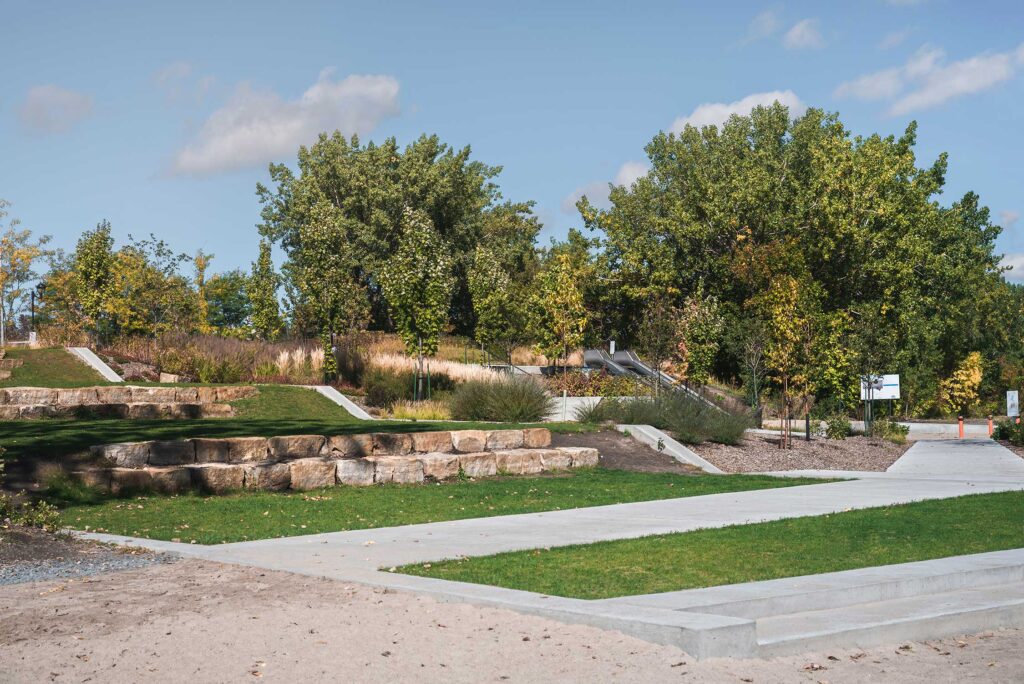
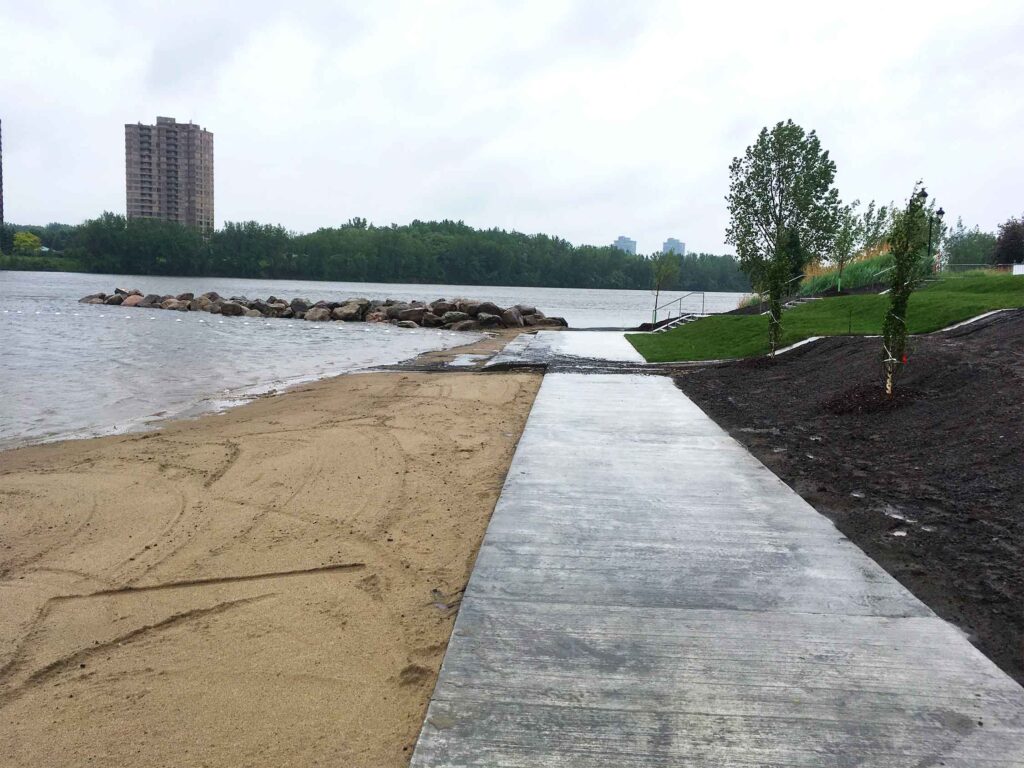
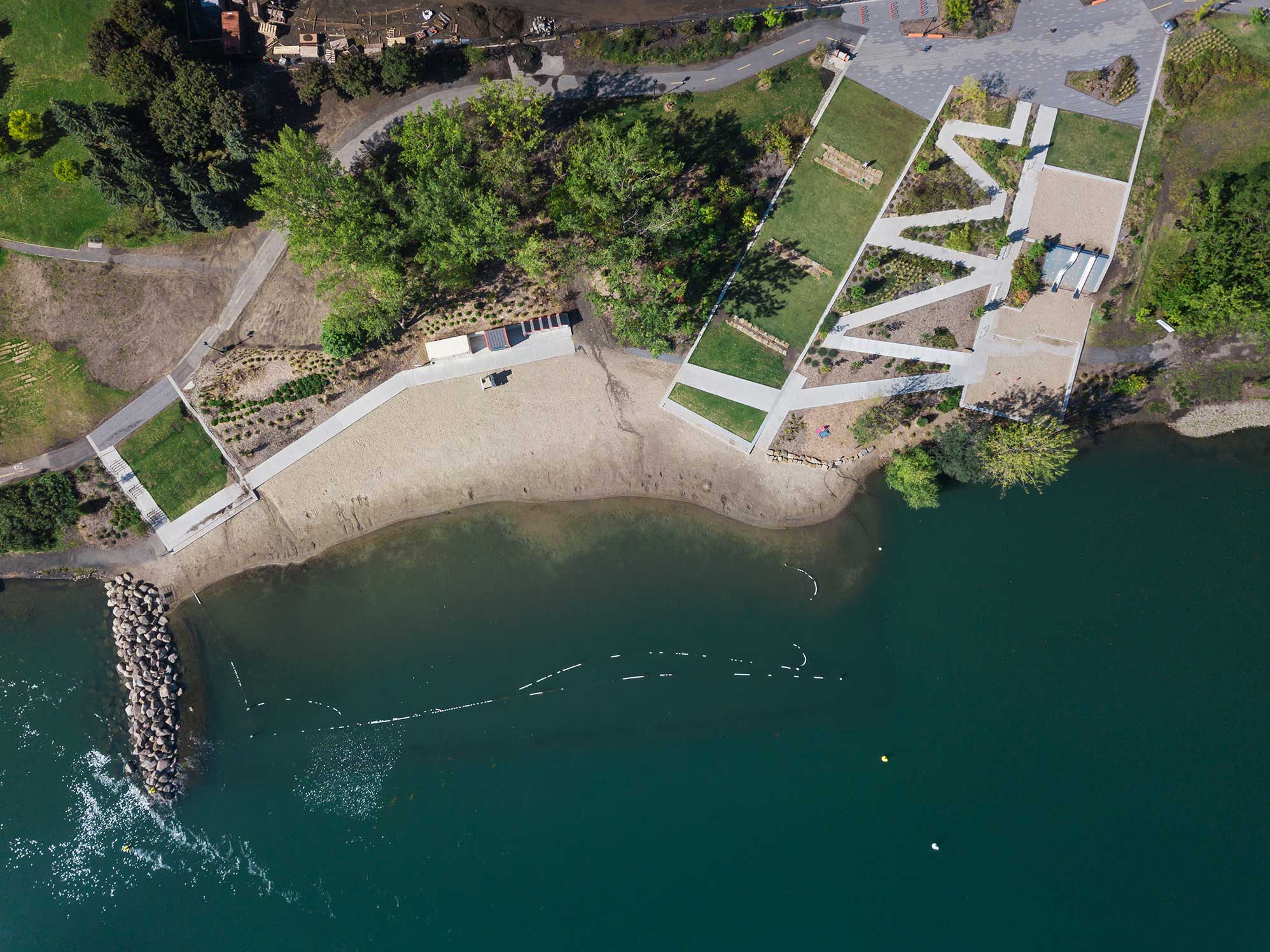
Inaugurated on June 20, 2019, the Verdun Urban Beach is a project aimed at giving the public renewed access to the St. Lawrence River. The Verdun borough commissioned gbi to prepare the plans and specifications for the construction of a new beach in the St. Lawrence River and to oversee the construction work.
The project stemmed from Verdun’s Strategic Plan, which seeks to create a complete, family-friendly living environment and to enhance the riverbanks.
Highly politicized and subject to public scrutiny, it faced a tight schedule since the budget came from Montréal’s 375th anniversary grants. In addition, the work was complicated by the construction of a play area above a former landfill site, not to mention the challenges of carrying out in-water construction during the winter months.
A first in Québec
Ce projet a mis à l’épreuve la créativité des ingénieurs civils de gbi.
Since the shoreline development was located directly above a former landfill site, excavation, grading, and, most importantly, complete soil decontamination work were required.
Throughout the project, significant measures were implemented to prevent any site contamination. From limiting access zones to managing excavation and backfill materials, everything was organized to ensure that neither the soil nor any bodies of water were contaminated.
square metres total area
plants
millimetres in diameter for the dike, built with clean, natural granite rocks
Careful Sequencing of the Work
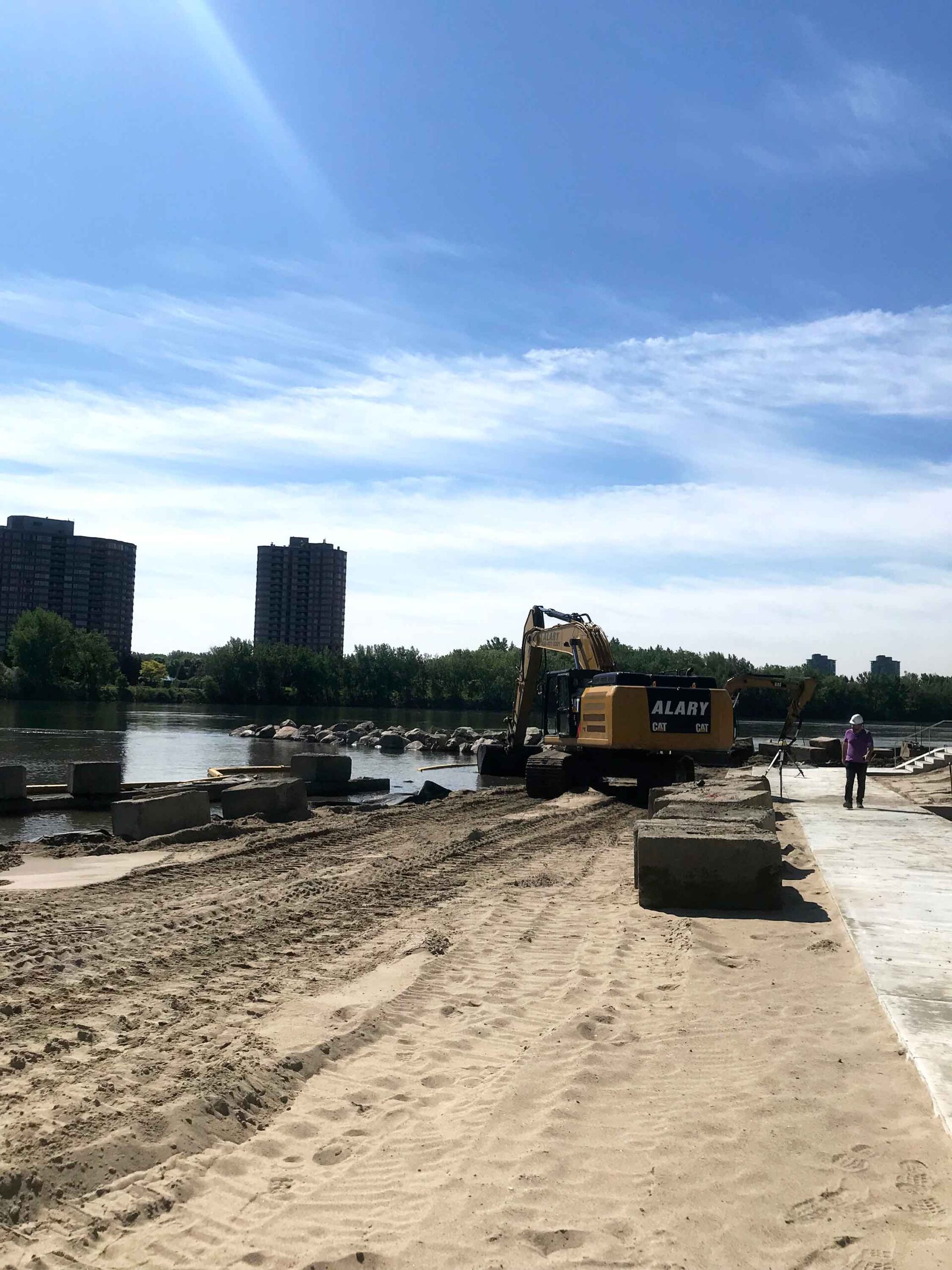
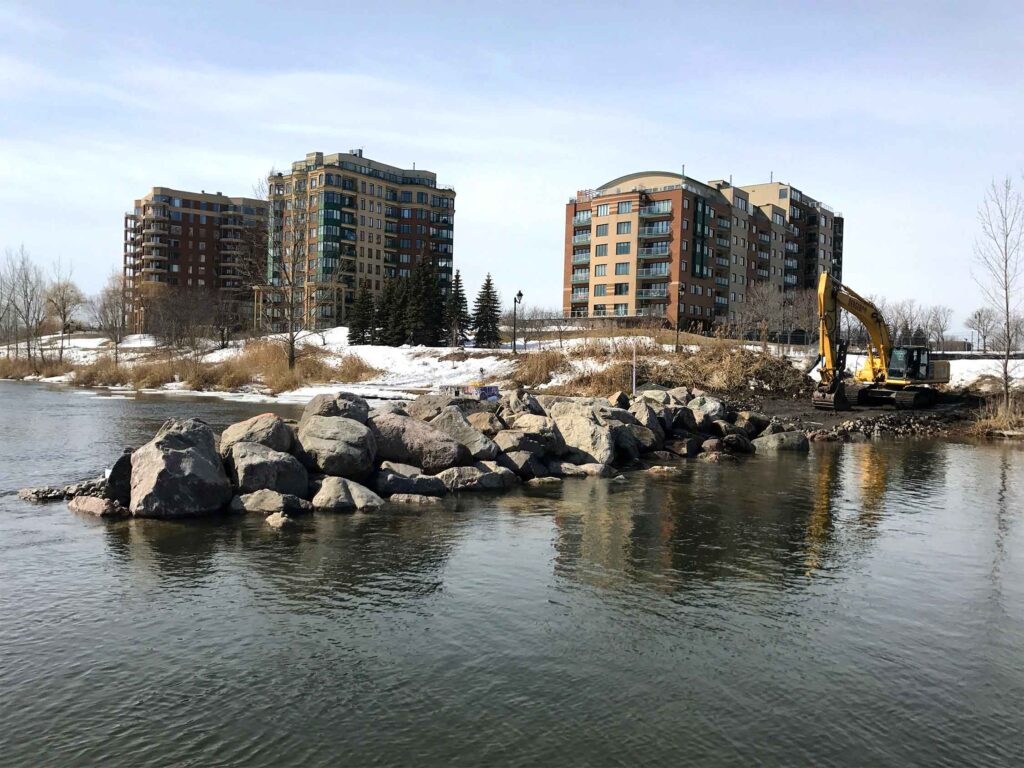
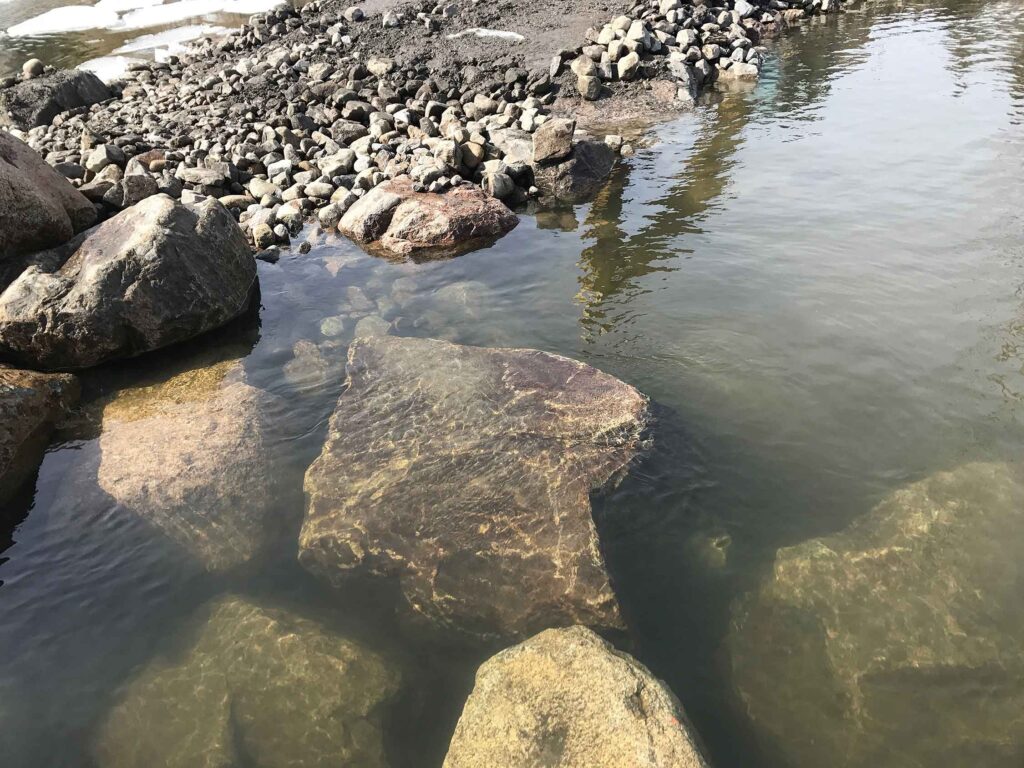
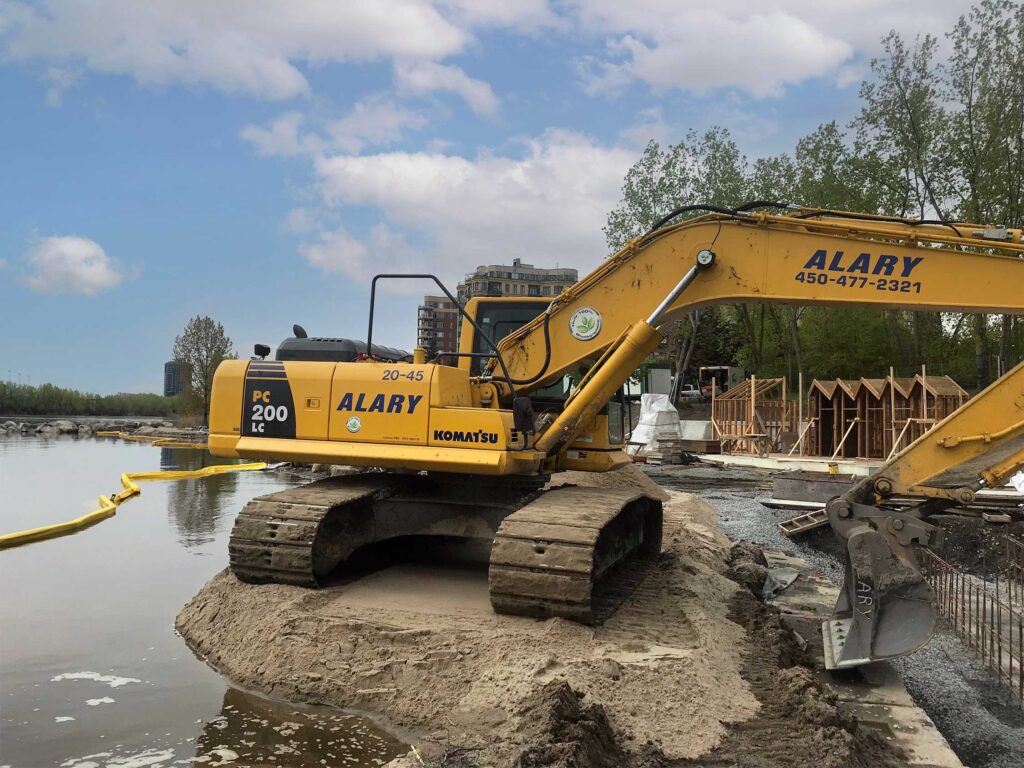
Temporary dikes were built to allow machinery to reach the far end of the swimming area and construct an underwater rock wall to contain the sand. The in-water stages were particularly critical. Pre-washed stones were carefully placed on the riverbed to avoid stirring up sediments. To prevent erosion caused by strong currents, a bed of granite rocks was installed at the end of the dike. Throughout all these stages, continuous and rigorous monitoring of suspended matter underwater was carried out.
Restricted Work Periods
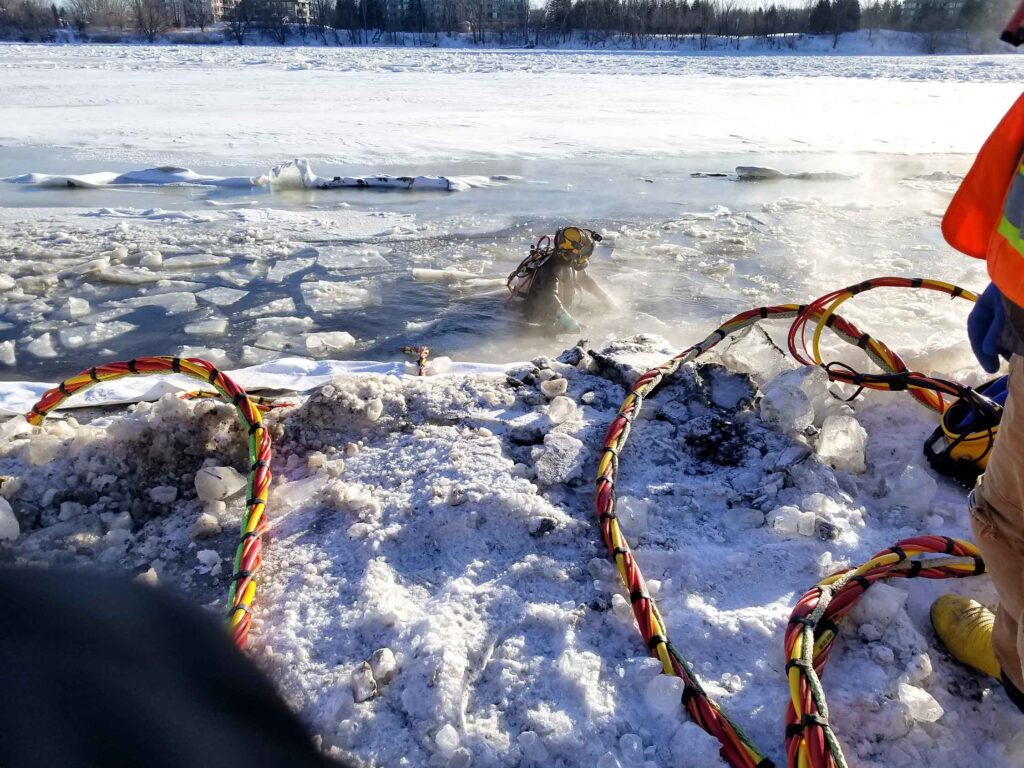
From a technical standpoint, the execution timeline was a major constraint. No work was permitted between March and August, the spawning period for many fish species. The installation of the underwater geotextile membrane was therefore carried out in winter, in harsh conditions and under the ice, to place the geotextile between the sand and granite rocks.
In addition, shoreline surface work was particularly challenging, as in spring 2019 the St. Lawrence River reached its highest level in the past hundred years.
Inclusion of Wildlife and Vegetation
Disturbances to aquatic habitats were kept to a minimum by avoiding sensitive spawning areas. The removal of debris from the riverbed even created a more favourable environment for fish reproduction. Furthermore, bays were created as compensation measures to protect local wildlife and flora. Three weeks before the start of construction, a campaign was organized to capture and relocate the brown snake.
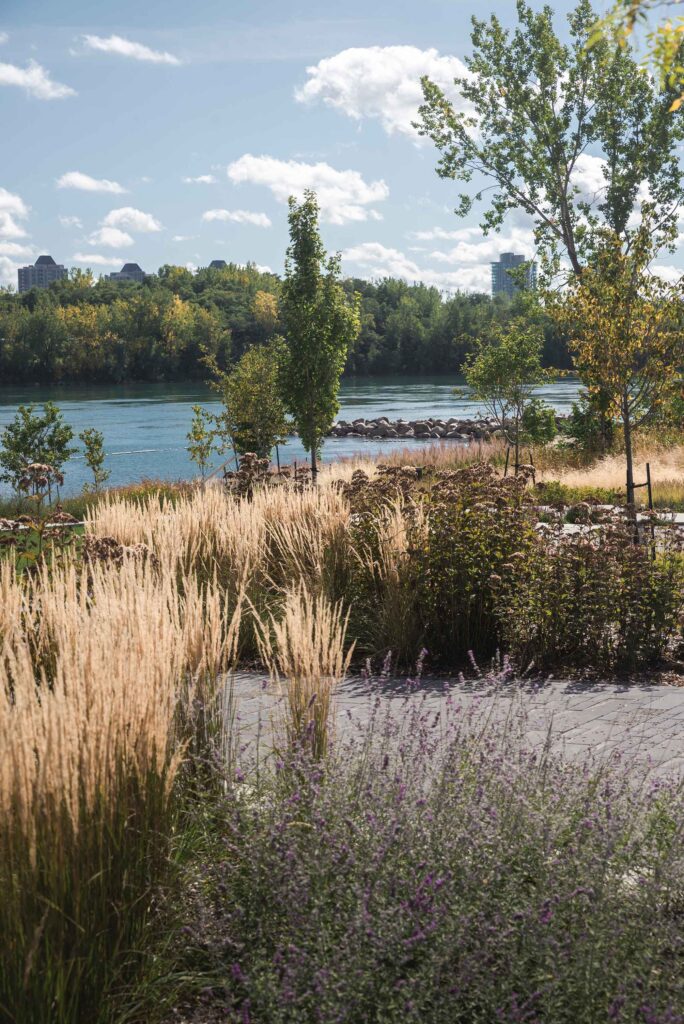
Whenever possible, vegetation was pruned rather than removed. Landscaping of the areas affected by construction involved replanting native species. In total, more than 12,000 plants of all kinds were planted as part of this project. For every tree felled, two were planted. Mature trees and those belonging to valuable species were preserved. Dead trees that support bird nesting were also maintained.