











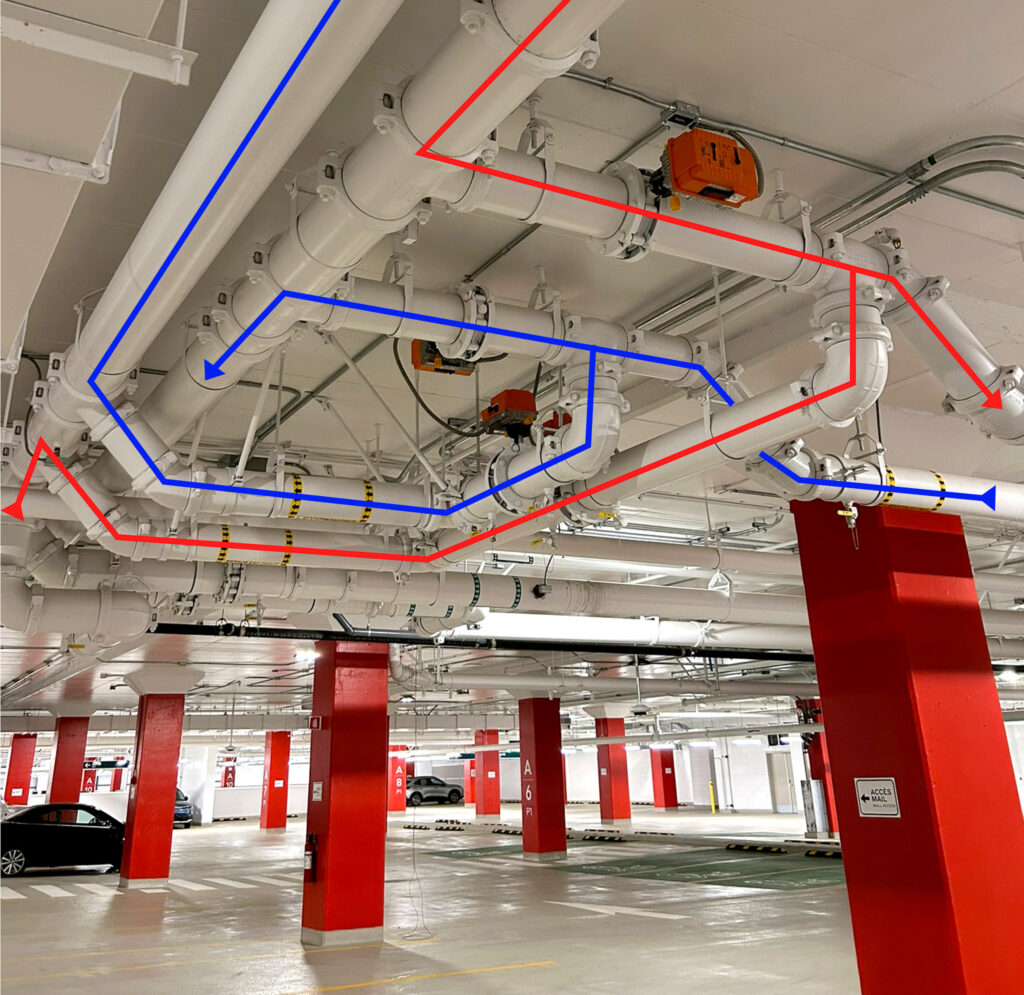
The Royalmount Phase 1 project is featured in PLAN magazine, published by the Ordre des ingénieurs du Québec. The article highlights one of the development’s most remarkable innovations: its dual energy transfer loop, a solution that recovers, transfers, and redistributes energy between buildings to optimize its use.
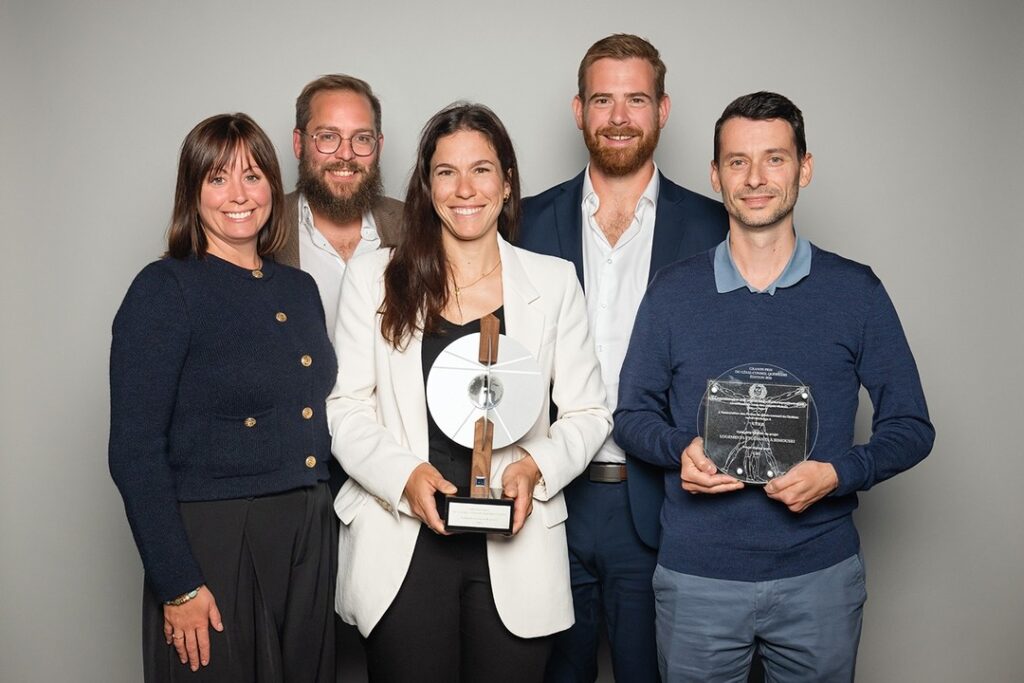
The project was also recognized with the Honoris Genius Award earlier this year, a distinction that underscores the key role engineering plays in designing large-scale sustainable solutions.
An Innovative Energy Approach
The dual energy transfer loop is based on a simple principle: leveraging energy generated in certain areas of the site to meet the needs of other buildings. This approach creates a true energy ecosystem where excess heating or cooling is recovered rather than wasted.
At Royalmount, 86% of the energy used on site comes from renewable sources. This strategy also reduces energy consumption by 69% and greenhouse gas emissions by 93% compared to a traditional shopping centre.
The success of the energy loop is largely the result of the early involvement of design teams and close collaboration among project stakeholders. As Olivier Pelletier, Mechanical Director at gbi, explains:
The project showed us just how important it is to be involved from the outset.
This collaborative approach made it possible to integrate innovative solutions from the earliest design stages and optimize the overall energy system.
Recognized gbi Expertise
The article also features Maxime Boisclair, Director of Sustainable Development at gbi, who emphasizes the importance for engineers of going beyond technical considerations to demonstrate the overall value of a project.
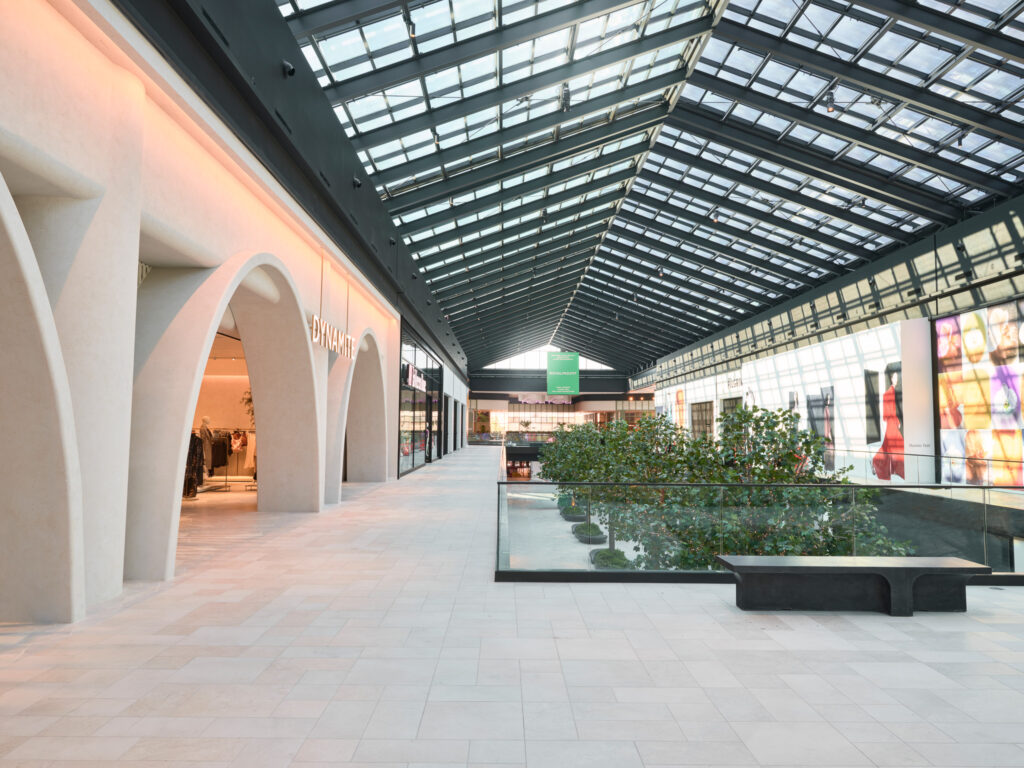
gbi’s expertise in sustainable development, building mechanical systems, and energy efficiency has helped make Royalmount a benchmark for decarbonization and innovation in the real estate sector. Being featured in PLAN magazine reflects the know-how of gbi’s teams and their commitment to designing high-performance infrastructure that addresses today’s and tomorrow’s environmental challenges.